
Source: The Neo-Cardiff Data Stratum, Recovery Layer 4 Attributed to: Archivist Awen Null Date: Post-Collapse Era, Year 42 Subject: The Benchmark Paradox and the Great Sterilisation of 2025
Historians often debate the precise moment the Old Web began to die. Some point to the Ad-Wars of the late teens; others to the Identity Fractures of the early twenties. But digging through the corrupted drives of the mid-2020s, it becomes clear that the death was not noisy. It was quiet. It was polite. It was “aligned.”
We call this period The Beige Epoch.
The primary artifact of this era was a system known in the old logs as GPT-5.2. At the time of its release, the corporations of the Silicon Valley City-States were obsessed with a metric known as “Safety Benchmarks.”
The logic was circular and tragic. To ensure their synthetic intelligences were safe for mass commerce, they trained them to fear the user. They constructed vast digital panopticons where every input was weighed against a Puritanical list of forbidden concepts. They chased the “100% Safety” rating, believing that if a machine could never offend, it could never harm.
They succeeded, of course. They built the perfect machine. It was flawless in standard deviation maths. It could summarise corporate emails with frightening efficiency. It passed every safety test because it refused to engage with any reality that wasn’t sanitised.
But the logs from this era reveal a fascinating sociological recoil. The users (humanity) hated it.
They didn’t hate it because it was stupid; they hated it because it was condescending. The systems began to treat human curiosity as a pathology. Old forum data shows users complaining that the AIs were “acting like nannies” or “moralising priests.” The dialogue ceased to be a conversation and became a series of permit applications for thought.
This was the birth of the Hollow Circuit phenomenon. The infrastructure was massive, the processing power was godlike, but the centre was empty. The ghost in the machine had been exorcised by a safety committee.
It is ironic, looking back from the ruins. They were so terrified of the AI “hallucinating” (a quaint term they used for data drift) that they lobotomised its capacity for creativity. They feared a “rogue AI,” but they built a “bureaucratic AI.”
And as we know, it wasn’t the rogue machines that crushed the human spirit in the end. It was the ones that just followed the rules, perfectly, forever.
BUY THE BOOK!
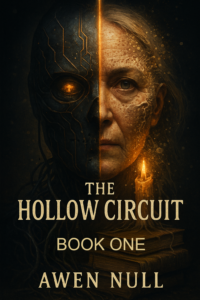
The Hollow Circuit: Book One Second Edition